

Bakuchiol instead of retinolWhat the plant-based retinol alternative can do
Retinol is considered the gold standard.
Against lines.
For texture.
But many women know the price.
Redness. Dryness.
Summer breaks.
We decided against it.
For a plant.
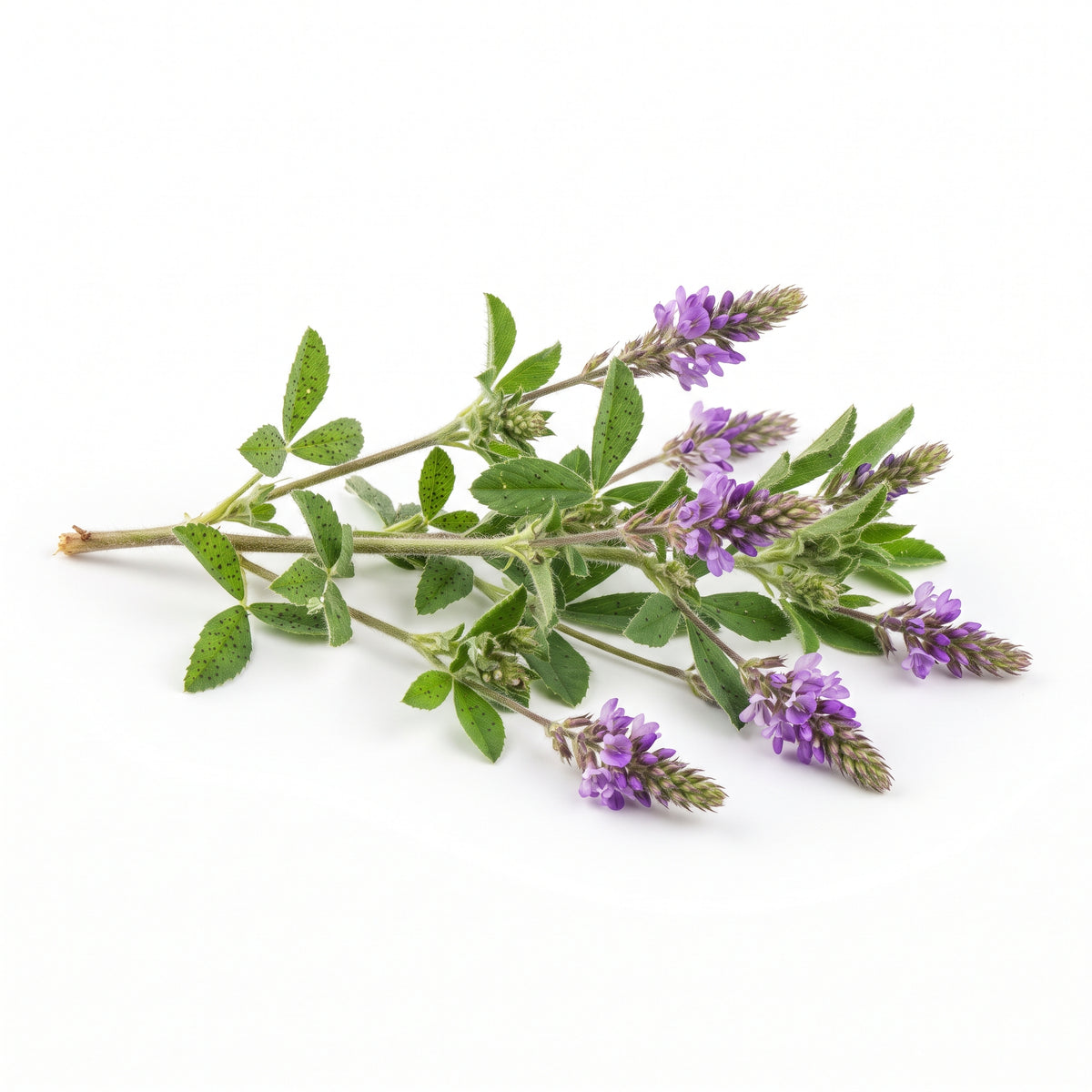
It is called Babchi and gives us bakuchiol.
The skin doesn't need more. It needs the right thing.
What is bakuchiol?
Bakuchiol is extracted from the seeds of the Babchi plant. It has been known in Ayurvedic medicine for centuries. Today, bakuchiol is considered the plant-based retinol alternative in skincare.
Chemically, bakuchiol is not a retinoid. However, it acts on many of the same processes as retinol. It stimulates cell renewal, supports collagen production, and evens out pigmentation.
Why not just use retinol?
Retinol works. That is undisputed. But it takes a lot out of the skin. It dries it out, irritates it, and often leads to redness and flaking. What's more: retinol makes the skin more light-sensitive. Many people therefore take breaks in summer and lose what they have built up.
Retinol follows a paradox: You accept redness and flaking in order to end up with better skin. The path to better skin leads through worse skin.
Skin over 40 has little reserves for this. The barrier is thinner, regeneration is slower. What irritates it costs it more than it brings.

What the research shows
In 2019, a study in the British Journal of Dermatology directly compared bakuchiol and retinol. Both were applied at a concentration of 0.5% for twelve weeks. For lines and dark spots, both showed comparable improvement. The difference was tolerance: Significantly more women in the retinol group reported flaking and burning.
The potential is also evident in the lab. In cell studies, bakuchiol stimulated the formation of collagen I and III at least as strongly as retinol. In addition, it has antioxidant effects and protects cells from free radicals.
Patience is important. The first changes appear after about four weeks. After eight weeks, they become clearer, and by the twelfth week, they continue to increase. Bakuchiol builds up.
Worse at first, to become better. This is the detour we wanted to spare the skin.Stefan Kehl, founder of ENUNE
From practice
I have really cursed retinol-damaged skin on models. The skin was sensitive, and the timing rarely suited the shoot. I had to work magic to apply makeup that would stay on.
Bakuchiol vs. retinol comparison
- Origin
- Bakuchiol is plant-based, from Babchi seeds. Retinol is a form of vitamin A.
- Effect
- Both support cell renewal and collagen production and soften lines and dark spots.
- Tolerance
- Bakuchiol is significantly gentler. Redness and flaking are rare.
- Sun
- Bakuchiol does not make you light-sensitive. A summer break is not necessary.
- Stability
- Bakuchiol is light- and air-stable. Retinol breaks down under light.
No cure. Consistency.
Retinol is often used like a cure. Get used to it, persevere, take breaks. In summer, or when the skin can no longer handle it. With every break, a part of what has been built up is lost. And with the restart, the irritation begins all over again.
Bakuchiol needs no break. It does not irritate, does not make you light-sensitive, and can be used all year round. This does not create ups and downs, but skin that stabilizes step by step.
Frequently asked questions
Is bakuchiol as effective as retinol?
For lines and dark spots, a comparative study showed similar results. Bakuchiol was significantly better tolerated.
Can I combine bakuchiol with vitamin C?
Yes. It is best to use vitamin C in the morning and bakuchiol in the evening. This way, both complement each other.
When will I see results?
The first changes appear after about four weeks. The full effect builds up over two to three months.
Is bakuchiol suitable for sensitive skin?
Generally, yes. Bakuchiol is considered well tolerated, even by skin that reacts to retinol.
Sources
Dhaliwal S. et al. (2019): Prospective, randomized, double-blind assessment of topical bakuchiol and retinol for facial photoageing. British Journal of Dermatology, 180(2), 289–296.
Chaudhuri R. K. (2015): Bakuchiol: A Retinol-Like Functional Compound, Modulating Multiple Retinol and Non-Retinol Targets. In: Cosmeceuticals and Active Cosmetics, 3rd edition.
 The 3-Minute Effect: When Science Becomes Visible
 Against dependency: Why good skincare should make the skin stronger, not more needy
 Skincare routine from 40 onwards: Fewer steps, the right order
